Buyers looking at the Texas Hill Country often weigh the balance between urban convenience and small-town appeal. When exploring options outside the San Antonio city limits, a common question arises: is boerne tx good for young professionals? Evaluating this requires a close look at commuting logistics, housing costs, and daily amenities.
The landscape of Kendall County has evolved significantly over the past few years, bringing new residential developments and expanded retail options. Living in Boerne today means navigating a distinct real estate market with its own property tax structures and commute patterns. Understanding these local dynamics is the best way to determine if the area aligns with your career and lifestyle goals in 2026.
Relocating to this specific corridor involves trading the immediate density of a major city for increased acreage and a different pace of daily life. The decision ultimately hinges on how much you value proximity to central business districts versus access to nature and spacious property lots. Examining the hard data regarding drive times and median prices provides a clear picture of what to expect.
While the aesthetic appeal of the region is undeniable, practical considerations like internet infrastructure and local healthcare access must drive the purchasing decision. The area has matured into a self-sustaining hub, but it still relies on the neighboring metropolis for certain high-level services. We will explore exactly what the current market demands from buyers looking to secure a home here.
Employment Proximity: Commuting to San Antonio via I-10
Traveling between Boerne and major San Antonio employment hubs centers entirely on the I-10 corridor. The town sits roughly 30 miles northwest of Downtown San Antonio, making the daily drive a significant factor for anyone working in the city center. In light traffic, this drive typically takes about 30 to 35 minutes.
Rush hour changes the equation considerably for daily commuters. Drivers should expect travel times to extend to 45 minutes or more during peak morning and evening windows. The highway infrastructure handles heavy volume, but predictable bottlenecks occur near the Loop 1604 interchange.
For those with hybrid schedules, making this drive two or three days a week is often highly manageable. Remote workers find the distance negligible, especially since local fiber internet expansion has kept pace with residential growth. Relying on a strict five-day-a-week office commute requires a higher tolerance for highway congestion.
The I-10 route is straightforward, but it remains the primary artery connecting the Texas Hill Country to the urban core. Alternative backroads exist, though they rarely save time and often feature lower speed limits with winding terrain. Buyers must realistically assess their office requirements before committing to this daily distance.
Factoring in vehicle wear and tear is another practical step when evaluating this commute. The mileage adds up quickly over a calendar year, impacting fuel budgets and maintenance schedules. Understanding this transit reality is the most crucial step for anyone evaluating employment proximity in the region.
Housing Market Data and the Cost of Living in Boerne
The 2026 real estate landscape in Kendall County presents a premium price point compared to neighboring Bexar County. Current median home prices generally land in the $500,000s to $600,000s, varying heavily based on lot size and neighborhood age. Buyers will find everything from restored historic properties near the downtown area to expansive new builds.
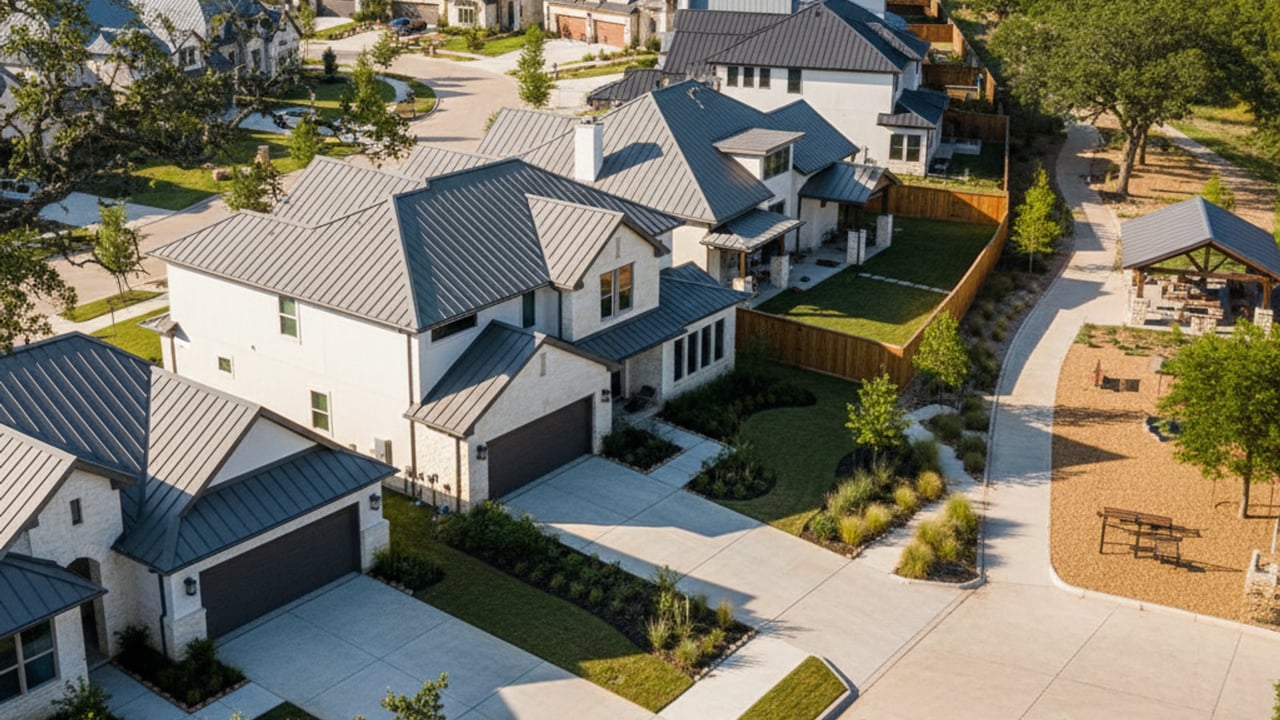
Master-planned communities dominate the newer inventory, offering modern floor plans and extensive neighborhood amenities. These developments often feature community pools, private trail systems, and dedicated green spaces that appeal to buyers wanting a turnkey lifestyle. Older subdivisions offer mature trees and fewer deed restrictions at the cost of requiring modern updates.
Property taxes are a critical component of the overall cost of living here. The base property tax rate in Kendall County hovers around 1.85% to 1.95% - a figure that is often lower than rates found within San Antonio city limits. This base rate rarely tells the whole story for buyers looking at new construction.
Many of the newer developments utilize Municipal Utility Districts to fund their initial water and road infrastructure. These MUD districts, such as the ones operating in Esperanza, can push effective tax rates above 2.5%. Buyers must carefully review the specific tax assessments for any property before submitting an offer.
Homeowners association dues represent another variable expense that fluctuates widely across the region. HOA fees range from a modest $78 per month in older subdivisions to over $1,500 per month for exclusive luxury golf memberships. Factoring in these carrying costs is essential for an accurate monthly housing budget.
While the financial barrier to entry is higher, the trade-off usually comes in the form of space. Buyers frequently secure larger lots and more square footage than they would at similar price points closer to the urban center. This spatial advantage remains the primary driver for the sustained housing demand in the area.
Local Amenities, Walkability, and the Hill Country Mile
Daily life in this part of TX revolves heavily around the historic central district. The Hill Country Mile serves as the commercial and social anchor, featuring a concentrated stretch of local dining, boutique retail, and coffee shops. This pedestrian-friendly zone offers a highly walkable core within an otherwise car-dependent region.
The architectural preservation of the downtown area provides a distinct visual character that newer suburbs lack. Restored limestone buildings house independent businesses, creating a localized economy that residents actively support. Parking in the central district is generally accessible, though weekends draw significant visitor traffic from surrounding counties.
Access to outdoor recreation is another major draw for buyers moving to the area. The Cibolo Nature Center provides extensive trail networks, while nearby state parks offer ample opportunities for hiking and kayaking. These natural amenities provide a distinct contrast to the concrete density of urban environments.
Local parks and municipal green spaces are well-maintained and integrated directly into the town layout. Residents utilize these areas for daily exercise, dog walking, and community gatherings throughout the year. The emphasis on outdoor accessibility is a core component of the local lifestyle.
Entertainment options here lean heavily toward relaxed weekend markets, local breweries, and community festivals. Buyers seeking high-energy nightlife, late-night dining, or large-scale concert venues will still need to make the drive into San Antonio. The local amenity base is robust for daily needs, but it maintains a decidedly slower pace.
Local Infrastructure and Boerne Independent School District
Institutional infrastructure is a major consideration for anyone evaluating the long-term viability of relocating here. The Boerne Independent School District serves the majority of the local population, managing several campuses across the region. Public schools in the district maintain specific student-to-teacher ratios that frequently attract buyers prioritizing educational access.
The district has expanded its facilities over the past decade to accommodate the steady influx of new residents. Bond initiatives have funded modern technology integrations and upgraded athletic complexes across multiple campuses. Buyers often track the specific attendance boundaries closely, as rezoning occasionally occurs to balance enrollment numbers.
Healthcare access has improved steadily, with several urgent care clinics and regional hospital branches now operating locally. Routine medical appointments, dental care, and general practice needs are easily handled without leaving town. The presence of these facilities drastically reduces the need to commute for basic health services.
Residents must still travel into the South Texas Medical Center in San Antonio for highly specialized surgeries or complex treatments. The drive to the medical center is straightforward via the highway, but it requires planning for traffic delays. Buyers with specific, ongoing medical needs should map out the exact distance to their preferred specialists.
Daily errands are fully supported by local grocery chains, pharmacies, and big-box retailers situated along the highway frontage roads. The infrastructure handles the current population well, though weekend traffic near major retail centers can become congested. Buyers will find that they rarely need to leave the immediate area for basic household necessities.
Frequently Asked Questions
How far is Boerne, Texas from San Antonio?
The town is located roughly 30 miles northwest of Downtown San Antonio via the I-10 corridor. In clear traffic, the drive takes about 30 to 35 minutes to reach the city center. During peak rush hour, commuters should expect the trip to take 45 minutes or more.
What is the average cost of a home in Boerne?
As of 2026, median home prices typically range from the $500,000s to the $600,000s. This baseline fluctuates significantly depending on the specific neighborhood, acreage, and property age. Carrying costs like MUD taxes and HOA fees will also impact the total monthly housing expense.
